You go to bed on time, lie in bed, but toss and turn for hours. Or you get 7-8 hours of sleep, but still wake up feeling tired, with a heavy head and difficulty concentrating. These situations are very common and are often dismissed as “stress” or a “habit.”
However, according to medical organizations such as the Sleep Foundation and the NIH, these symptoms may be signs of sleep disorders – a group of conditions that directly affect the brain, cardiovascular system, and long-term quality of life.
The problem is: most people don’t realize they have a sleep disorder until it becomes serious. So how can you recognize it, and when should you see a doctor?
What are sleep disorders?
Sleep disorders are medical conditions that affect the ability to fall asleep, stay asleep, or the quality of sleep , preventing the body from achieving the necessary state of rest and recovery.
According to the American Academy of Sleep Medicine (AASM), normal sleep consists of several alternating cycles of light sleep, deep sleep, and REM sleep. When these cycles are disrupted, the body may experience:
- Lack of energy recovery
- Hormonal disorders
- Impacts on brain function
It is necessary to distinguish clearly:
- Temporary insomnia: lasts for a few days, often due to stress or environmental changes.
- Pathological sleep disorders: lasting for weeks, recurring frequently, and having a noticeable impact on health.
According to the CDC, about one-third of adults don’t get enough sleep, and a significant percentage of those have undiagnosed sleep disorders.
Common types of sleep disorders
Modern medicine (according to the classification of the American Academy of Sleep Medicine – AASM) recognizes more than 100 types of sleep disorders, divided into many different groups. However, in clinical practice, the majority of patients who come for examination usually fall into one of the following groups.
It’s important to note that
the same symptom, “insomnia” or “fatigue,” can have completely different underlying causes.
Insomnia – the most common but easily misunderstood form.
Insomnia is not simply “difficulty falling asleep,” but rather a disorder characterized by:
- Difficulty falling asleep (still unable to fall asleep after lying down for more than 30 minutes).
- Waking up in the middle of the night and having trouble falling back asleep.
- Waking up too early.
- Sleeping lightly, waking up easily.
According to the NIH and AASM, chronic insomnia is diagnosed when it:
- Occurs ≥ 3 times/week
- Lasts ≥ 3 months
- Has effects during the day (fatigue, reduced concentration)
Key clinical insights:
Many people think their insomnia is due to stress, but the reality is:
- They may be suffering from underlying anxiety or depression
- Or even sleep apnea causing frequent awakenings.
In other words: insomnia is often a symptom – not always the underlying illness.
Sleep apnea (OSA) – a dangerous but often overlooked disorder.
Obstructive sleep apnea (OSA) occurs when the upper airway repeatedly collapses during sleep, disrupting breathing.

Mechanism:
- When you sleep, the muscles in your throat relax.
- Narrowing or obstruction of the airway occurs.
- Reduced or stopped airflow → decreased oxygen in the blood.
- The brain is forced to “wake up” the body to breathe again.
This cycle can repeat dozens to hundreds of times each night.
Typical signs:
- Loud and prolonged snoring (irregular, sometimes loud, sometimes intermittent).
- The person sleeping next to them notices they stop breathing for a few seconds.
- Gasping for breath or choking while sleeping.
- Waking up with a headache and dry mouth.
- Daytime sleepiness despite getting enough sleep.
According to the Mayo Clinic and AASM, OSA is assessed using the AHI index:
- Mild: 5–15 times/hour
- Moderate: 15–30 times/hour
- Severe: >30 times/hour
The important thing is:
- Many patients don’t suffer from insomnia , but are still extremely tired.
- Many people only seek medical attention when they already have high blood pressure or cardiovascular problems.
OSA is one of the leading reasons for polysomnography in patients .
Circadian rhythm disorders – “sleep schedule imbalances”, but not as simple as they seem.
These are disorders related to the circadian rhythm – the mechanism that controls the sleep-wake cycle according to day and night.
Symptoms:
- Unable to fall asleep before 1-2 AM, even though sleepy.
- Difficulty waking up in the morning.
- Alert at night, tired during the day.
Commonly found in:
- Night shift workers.
- People who use electronic devices more at night.
- Young people who have a long-standing habit of staying up late.
According to the Sleep Foundation, blue light from screens can inhibit melatonin, causing the body to “mistake” it for daytime.
Clinical practice:
Many people think they have insomnia, but in reality, it’s
just a circadian rhythm imbalance, not that the brain is unable to sleep.
Restless Legs Syndrome (RLS)
This is a neurological disorder that causes discomfort in the legs at rest, especially at night.
Symptoms:
- Numbness, tingling, a feeling like “ants crawling”
- The urge to move the legs constantly.
- The effect lessens with movement and worsens when lying still.

This results in:
- The patient having difficulty falling asleep.
- Sleep being interrupted multiple times.
According to the NIH, RLS may be related to:
- iron deficiency
- chronic kidney disease
- pregnancy
In fact:
Many people are unaware that this is a medical condition, thinking it’s just “normal leg numbness,” leading to prolonged insomnia without a clear cause.
Narcolepsy – rare but impactful
Narcolepsy is a neurological disorder that causes excessive and uncontrollable daytime sleepiness.
Characteristic:
- Sudden drowsiness, able to fall asleep at any time.
- It can happen while talking or working.
- Some cases involve cataplexy (a condition characterized by sudden muscle weakness during strong emotional reactions).
The cause is related to Disorders of the neurotransmitter hypocretin.
Although rare, the disease seriously affects the quality of life as well as driving and workplace safety.
Key Summary
Key points to remember:
- Sleep disorders are not just insomnia.
- The same symptom can be caused by many different factors.
- Some disorders (especially sleep apnea) can be dangerous but are not easily recognized.
In fact, many patients:
- Visiting the doctor because of insomnia.
- But after polysomnography , he was diagnosed with OSA.
That is why accurately assessing the type of sleep disorder is the most important step before treatment.
Signs of sleep disorders
You should pay attention if you experience the following signs:
- Difficulty falling asleep or prolonged insomnia
- Waking up multiple times during the night.
- Restless sleep, easily awakened.
- Daytime sleepiness despite getting enough sleep.
- Loud snoring, sometimes accompanied by sleep apnea.
- Waking up with a headache and dry mouth.
- Unusual movements during sleep (kicking legs, talking in your sleep)
- Chronic fatigue, decreased concentration, and memory impairment.
According to the Sleep Foundation, excessive daytime sleepiness is one of the most significant signs of an underlying sleep disorder.
Causes of sleep disorders
Sleep disorders are often caused by a combination of factors:
Mentality
- Prolonged stress
- Anxiety, depression
According to the NIH, sleep disorders and depression have a two-way relationship.
Lifestyle
- Drink caffeine in the evening.
- Using your phone before bed
- Staying up late, working night shifts
These factors disrupt the hormone melatonin and the circadian rhythm.
Pathology
- Cardiovascular disease
- Respiratory diseases (COPD, asthma)
- Endocrine disorders (diabetes, thyroid disorders)
- Sleep apnea
In particular, many patients only discover their underlying condition after seeking medical attention for sleep disorders.
How dangerous are sleep disorders?
Sleep disorders not only cause fatigue but can also lead to serious consequences:
Impact on brain function
- Memory loss
- Reduced ability to concentrate
- Increased risk of accidents.
Increased risk of chronic disease
According to the CDC:
- High blood pressure
- Cardiovascular disease
- Stroke
- Type 2 diabetes
Psychological impact
- Increased risk of depression
- Persistent anxiety
Decline in quality of life
- Reduce energy
- Reduced work efficiency
- Impact on relationships
When should you see a doctor for a sleep disorder?
You shouldn’t wait until you’re completely exhausted to see a doctor. Consider getting checked out if:
- Insomnia lasting more than 2–3 weeks
- Even with enough sleep, I still feel tired and not alert.
- Loud snoring accompanied by sleep apnea.
- Daytime sleepiness affects work performance.
- Frequently waking up with a headache or dry mouth.
- Having underlying conditions such as hypertension, obesity, and diabetes.
In these cases, a doctor may order polysomnography to determine the exact cause.
Diagnosis & testing methods
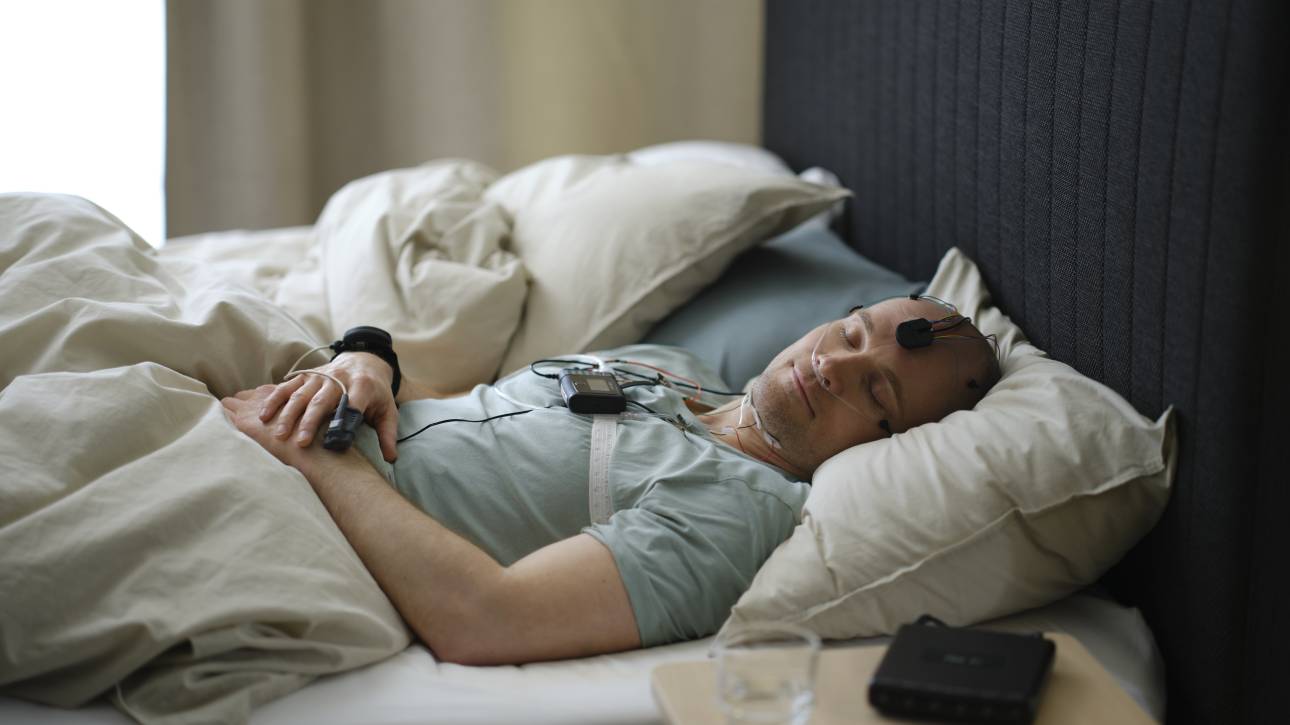
Polysomnography
This is the gold standard according to AASM in diagnosing sleep disorders.
This method records:
- Brainwaves (EEG)
- Heart rate
- Breathing
- Oxygen concentration
- Muscle movement
Helps detect:
- Sleep apnea
- REM sleep disorder
- Neurological abnormalities
>>>Register for a sleep consultation with an expert
Home respiratory polysomnography
Suitable for individuals suspected of having moderate to severe OSA.

Advantage:
- Convenient
- Lower costs
- Easy to implement
However, it is not a complete replacement for in-laboratory polysomnography in complex cases.
Ways to improve and treat
-
Change your lifestyle.
- Maintain a consistent sleep schedule.
- Limit caffeine intake after 2 PM.
- Avoid electronic devices before bed.
- Exercise regularly

-
Behavioral Therapy (CBT-I)
According to AASM, CBT-I is the first-line treatment for chronic insomnia, helping to:
- Adjusting sleep behavior
- Reduce sleep-related anxiety.
>>> Information on CBT-I Therapy Experts in Vietnam
-
Medical treatment
Depending on the cause:
- Medication (as prescribed)
- Treatment of underlying conditions
- Using a CPAP machine for OSA
Conclude
Sleep disorders are not simply insomnia. They can be a warning sign of many serious health problems, especially cardiovascular and respiratory diseases.
It’s important not to ignore the early signs. If your sleep is affecting your quality of life, seek medical attention early.
Accurate diagnosis, especially through polysomnography, will help you find the cause and treat it effectively – instead of “suffering” for a long time.
FAQ
Can sleep disorders resolve on their own?
Some mild cases may improve, but if they last longer than 2–3 weeks, you should see a doctor.
How long does insomnia have to last before it becomes dangerous?
If it lasts longer than 3 weeks or affects your life, a medical evaluation is needed.
Is sleep apnea curable?
It can be effectively controlled with CPAP or other methods.
Should polysomnography be performed at home?
Suitable for individuals suspected of having OSA, but requires a doctor’s prescription.
When should you see a sleep expert?
When sleep affects your health, work, or shows persistent abnormalities.
References
- Sleep Foundation – Sleep Disorders Overview
- Mayo Clinic – Sleep Disorders & Sleep Apnea
- National Institutes of Health (NIH) – Insomnia & Sleep Health
- Centers for Disease Control and Prevention (CDC) – Sleep and Chronic Disease
- American Academy of Sleep Medicine (AASM) – Clinical Practice Guidelines