


SleepFi Clinic
Comprehensive Solutions for a Healthy Sleep
SleepFi Overview
SleepFi Clinic is Vietnam’s leading center for advanced sleep screening, specializing in the diagnosis and treatment of sleep disorders. Guided by the mission to improve quality of life through scientific sleep care, SleepFi not only makes significant investments in modern SleepLabs and state-of-the-art equipment, but also takes pride in its team of highly trained sleep technologists, who are pursuing the internationally recognized RPSGT certification – the global gold standard for professional sleep technologists.
Why SleepFi?
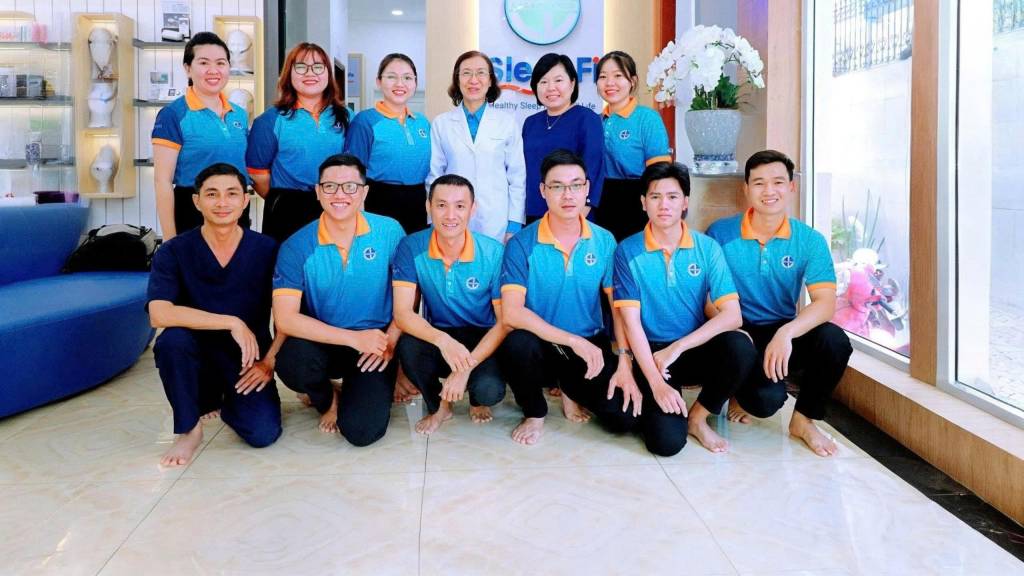
Our Expert Sleep Technologists, Meeting Global Standards
SleepFi is proud to have a team of highly experienced sleep technologists, professionally trained and continuously updated with the latest knowledge in accordance with the standards of the American Academy of Sleep Medicine (AASM). All of our technologists are 100% certified by the Vietnam Society of Sleep Medicine and maintain annual renewal of their Cardiopulmonary Resuscitation (CPR) certification.
Our Medical Director holds the Registered Polysomnographic Technologist (RPSGT) certification from the United States – one of the very first American-certified sleep technologists in Vietnam – setting the international benchmark for sleep testing standards at SleepFi.
With a commitment to continuous professional development, we strive to collaborate closely with specialists, physicians, and patients to deliver the most accurate sleep study results and to support personalized treatment journeys alongside healthcare experts and patients.
Facilities and State-of-the-Art Equipment
Facilities at SleepFi
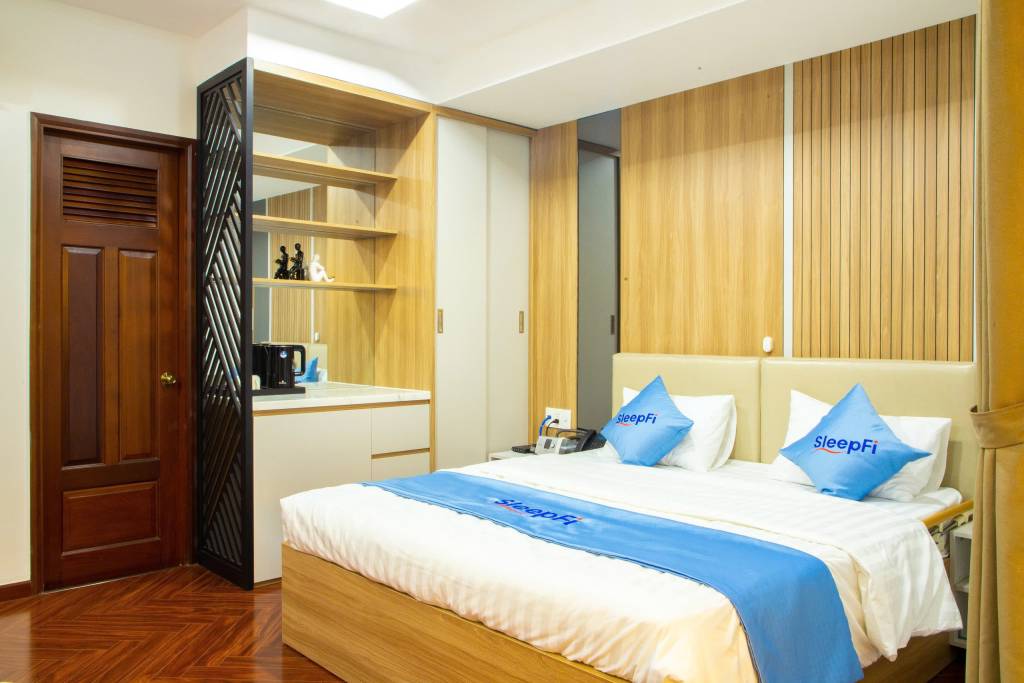
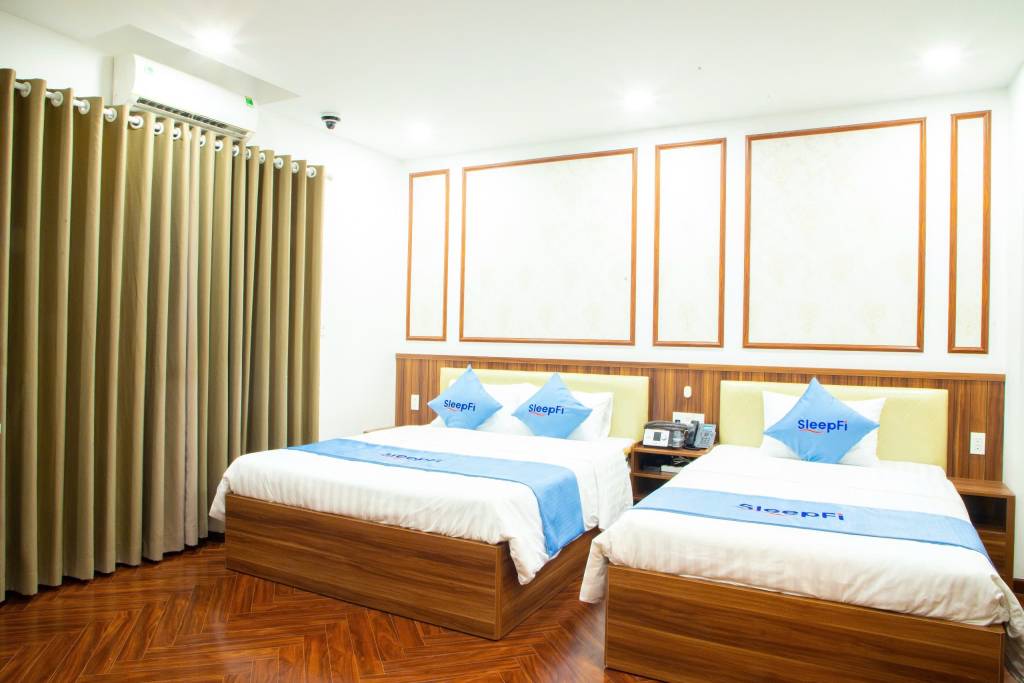
At SleepFi, our sleep assessment rooms are thoughtfully designed to resemble a natural sleeping environment, with adjustable lighting tailored to each patient’s usual day–night rhythm. The quiet, hotel-standard rooms with private bathrooms ensure maximum comfort, allowing patients to ease into sleep naturally.
We also pay special attention to patients’ individual sleep habits — from room temperature to pre-sleep routines and in-sleep behaviors — to create an environment that feels as close as possible to their everyday sleep setting.

Equipment
SleepFi is equipped with a modern and comprehensive system of devices to conduct a wide range of advanced sleep disorder assessments in accordance with the standards of the American Academy of Sleep Medicine (AASM). This includes Polysomnography (PSG) – the gold standard for diagnosing Obstructive Sleep Apnea (OSA) and other sleep disorders; Respiratory Polygraphy from basic to advanced and extended studies; PAP titration systems for optimal pressure determination; and transcutaneous CO₂ monitoring to evaluate sleep in adults, children, and patients with complex comorbid sleep disorders.
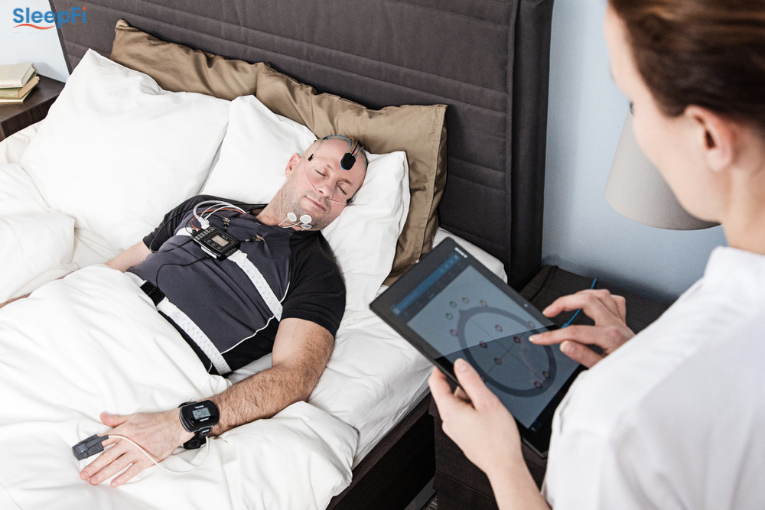
The advanced AASM-accredited polysomnography system Nox A1s at SleepFi is the most compact system of its kind, allowing patients to move freely during the night, such as when going to the bathroom. Its streamlined EEG cable design provides the least cumbersome experience for patients. Despite its compact size, the Nox A1s delivers powerful, cutting-edge technology, ensuring precise and reliable polysomnography results for both patients and specialists.
The flexibility of the Nox A1s allows SleepFi to conduct sleep evaluations in various settings – in-lab, at-home, or in hospital wards – without requiring patient transfer. Home-based polysomnography provides patients with a familiar sleep environment, enabling the most representative assessment of their natural sleep.
In addition, the Nox A1s system can be fully integrated with PAP titration and transcutaneous CO₂ monitoring, enabling accurate PAP pressure determination and hypoventilation assessment in patients suspected of having hypoventilation disorders requiring close follow-up.

Alongside gold-standard PSG, SleepFi performs a full spectrum of OSA screening tests using respiratory polygraphy devices – from standard to advanced and extended studies. To overcome the limitations of standard respiratory polygraphy, which cannot accurately distinguish between sleep and wake states and may underestimate disease severity, SleepFi employs the modern Nox T3s system. Integrated with Actigraphy and Artificial Intelligence (AI), it estimates sleep stages, precisely records wake–sleep time, and significantly improves the diagnostic accuracy of OSA, minimizing the risk of missed diagnoses.

Furthermore, the Nox T3s offers expandable capabilities, enabling the assessment of periodic limb movement disorders, electrocardiography (ECG) for additional cardiac indices, and bruxism (teeth grinding), depending on the physician’s indication.

Personalized Treatment
Through its collaboration with a multidisciplinary network of leading specialists in respiratory medicine, cardiology, neurology, psychiatry, psychology, otolaryngology (ENT), dentistry, pediatrics, endocrinology, and nutrition, SleepFi is dedicated to delivering personalized care for patients with sleep disorders — particularly sleep-related breathing disorders.
Beyond providing solutions, SleepFi strives to accompany patients throughout their therapeutic journey, enhancing treatment outcomes and improving the overall quality of life for individuals living with sleep disorders.

Advanced Sleep Care Services at SleepFi
SleepFi Sleep Clinic is designed as a modern sleep center, offering comprehensive services for the diagnosis, treatment, and post-treatment follow-up of sleep disorders. Here, patients undergo a structured process of examination – testing – consultation – and monitoring, all personalized to their individual needs. Each service is not only supported by advanced technology but also guided by the deep expertise and dedication of experienced sleep technologists.
The core services at SleepFi include:
Polysomnography – PSG

In-Lab Polysomnography – PSG Type 1 (AASM Gold Standard))
This is the most comprehensive diagnostic method for sleep disorders, often referred to as the “mirror of night-time physiology.” Conducted in an AASM-accredited Sleep Lab with a soundproof environment, controlled temperature, and specialized bed, the test ensures that patients achieve the most natural sleep possible.
The system records more than 20 physiological signals, including:
-
Electroencephalography (EEG) – analysis of sleep stages (N1, N2, N3, REM)
-
Electrooculography (EOG) and chin electromyography (EMG) – evaluation of REM cycles
-
Respiratory effort, airflow, snoring, and body position
-
Oxygen saturation (SpO₂) and transcutaneous CO₂ – detection of hypoventilation
-
Electrocardiography (ECG) – detection of arrhythmias associated with sleep apnea
-
Leg movement sensors – assessment of Restless Legs Syndrome (RLS) and Periodic Limb Movement Syndrome (PLMS)
PSG Type 1 is essential for:
-
Accurate diagnosis of Obstructive Sleep Apnea (OSA) severity
-
Detection of sleep-related movement disorders
-
Identifying causes of chronic insomnia
-
Diagnosing parasomnias such as sleepwalking, night terrors, and nightmares
-
Patients with complex symptoms, comorbid conditions, or those unresponsive to conventional insomnia treatments
At-Home Polysomnography – PSG Type 2 (Standardized and Patient-Friendly)
Designed for patients who are unable to visit the clinic or prefer the convenience of testing at home. Although performed outside the Sleep Lab, the device still records all essential physiological signals as in PSG Type 1, except for the absence of direct technologist supervision.
Procedure:
A SleepFi technologist visits the patient’s home, installs the device, and provides thorough instructions and guidance.
The device records sleep data continuously throughout the night.
Signal quality is carefully checked before and after the study.
Data are downloaded at the center and analyzed by trained sleep technologists.
Advantages:
Suitable for elderly patients, those with anxiety, or individuals with comorbidities that limit mobility.
Minimizes the impact of unfamiliar environments on sleep quality.
Remote monitoring by a technologist is possible if connectivity allows.
HSAT – Home Sleep Apnea Test
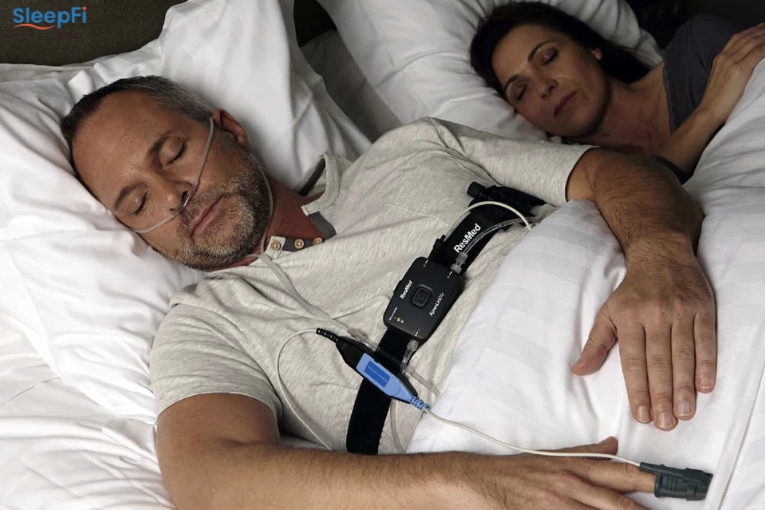
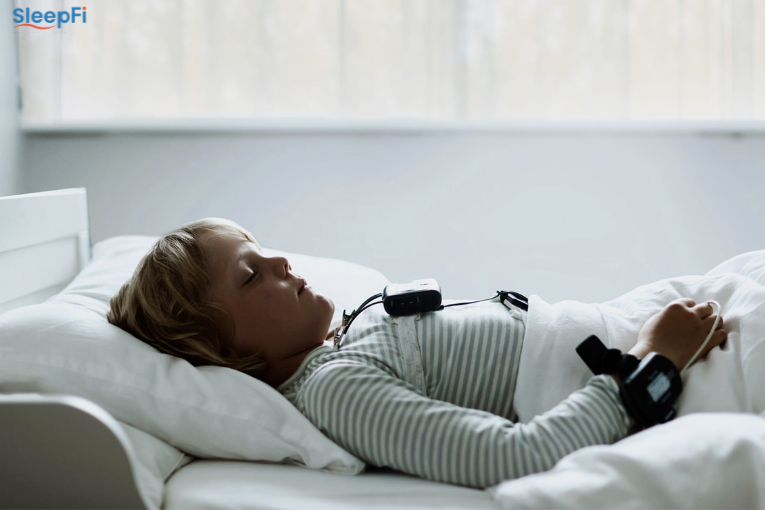
HSAT offers a simpler approach compared to full in-lab polysomnography (PSG) while still providing reliable results for the diagnosis of Obstructive Sleep Apnea (OSA). SleepFi offers three levels of HSAT, tailored to different patient needs:
Standard Version
Device used: ApneaLink Air (ResMed)
Parameters recorded:
Nasal airflow
Respiratory effort (chest and abdominal belts)
Heart rate
Oxygen saturation (SpO₂)
Snoring and body position
This test does not include EEG and therefore cannot distinguish actual sleep time. However, it is sufficient to diagnose OSA in patients with clear clinical suspicion and no complex comorbidities.
Best suited for individuals with:
Loud snoring and excessive daytime sleepiness
Obesity or unexplained hypertension
Family history of OSA
A need for early, simple, and cost-effective diagnosis
Advanced Version
Device used: Nox T3s (Nox Medical)
This version does not include EEG, but features the Nox BodySleep™ algorithm, which uses accelerometer signals to provide a relatively accurate estimation of sleep and wake time.
Additional data recorded:
Sleep architecture (estimated REM/NREM)
Sleeping positions (supine, prone, lateral)
AHI, SpO₂, heart rate, snoring, etc.
Best suited for individuals who:
Sleep for long hours but feel unrefreshed
Experience fragmented sleep or frequent nocturnal awakenings
Have chronic insomnia with suspected OSA
Require deeper insights into sleep quality and true AHI (not just based on time in bed)
Comprehensive Version
Device used: Nox T3s with expanded channels (leg movement sensors, chin EMG, ECG, etc.)
Additional parameters recorded:
Periodic limb movements (PLMS)
Bruxism and sleep-related movement disorders
Nocturnal cardiovascular events
Other abnormal signals contributing to sleep fragmentation
Best suited for individuals who:
Already use CPAP but still feel fatigued
Are suspected of having coexisting sleep disorders
Have neurological, cardiovascular, or endocrine comorbidities
Need fine-tuning or optimization of PAP therapy
Transcutaneous CO₂ Monitoring
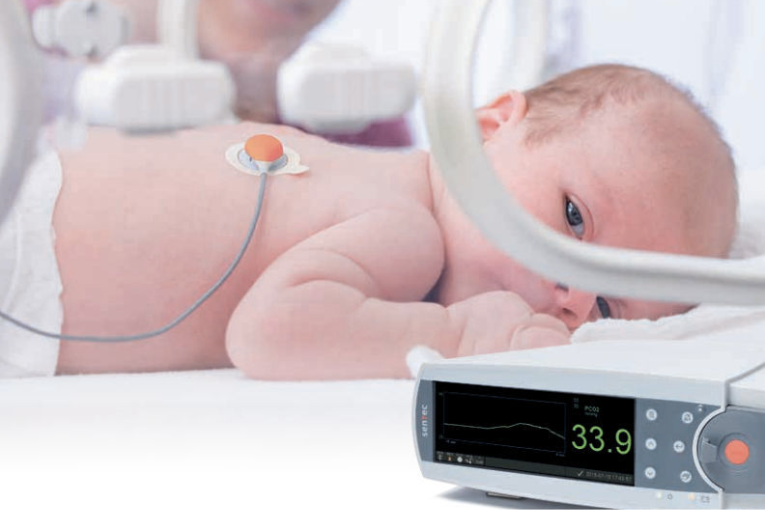
This is a critical parameter in evaluating nocturnal ventilation. Using a non-invasive skin sensor, the device measures CO₂ accumulation during sleep to detect conditions such as:
Nocturnal hypoventilation in late-stage COPD or severe obesity
Hypoventilation in Obesity Hypoventilation Syndrome (OHS)
Neuromuscular disorders (e.g., ALS, Myasthenia Gravis)
Prolonged nocturnal CO₂ elevation can lead to morning headaches, persistent fatigue, and excessive daytime sleepiness — issues that cannot be identified through SpO₂ monitoring alone.
CPAP Therapy Trial (Continuous Positive Airway Pressure)

For patients diagnosed with sleep apnea (AHI > 5), based on their condition and symptoms, the doctor may recommend CPAP therapy. SleepFi provides a CPAP trial service, allowing patients to experience the device and its treatment efficacy before deciding to purchase it for OSA therapy.
CPAP Pressure Calibration
Pressure calibration is a technique to determine the appropriate CPAP pressure settings tailored to the patient’s condition, ensuring optimal treatment. This calibration is performed by trained and certified technicians.
SLEEPFI PROVIDES PRESSURE CALIBRATION SERVICES AT THE CLINIC WITH SPECIALIZED EQUIPMENT AND CERTIFIED TECHNICIANS.

Sleep and Polygraphy Equipment Rental

To extend diagnostic and treatment support within the community and help more patients receive early detection and treatment, SleepFi also offers rental services for sleep and Polygraphyequipment to clinics and hospitals.
This service allows small and medium-sized clinics to reach a broader range of patients, facilitating early detection and treatment support.
>>Learn more about our equipment rental service
Lorem ipsum dolor sit amet, consectetur adipiscing elit. Ut elit tellus, luctus nec ullamcorper mattis, pulvinar dapibus leo.


