


Quick summary
Polysomnography (PSG) is currently the most comprehensive sleep test, considered the gold standard for diagnosing sleep apnea (OSA) and other sleep disorders.
At SleepFi, the polysomnography process consists of six medically approved steps: consultation, registration, appointment confirmation, preparation, measurement, and results collection.
The results help assess the AHI index, the degree of sleep hypoxia, and guide personalized treatment such as CPAP or BiPAP.
What is polysomnography?
Polysomnography (PSG) is a type of sleep study test that simultaneously records multiple physiological activities during sleep to comprehensively assess sleep quality and detect abnormalities.
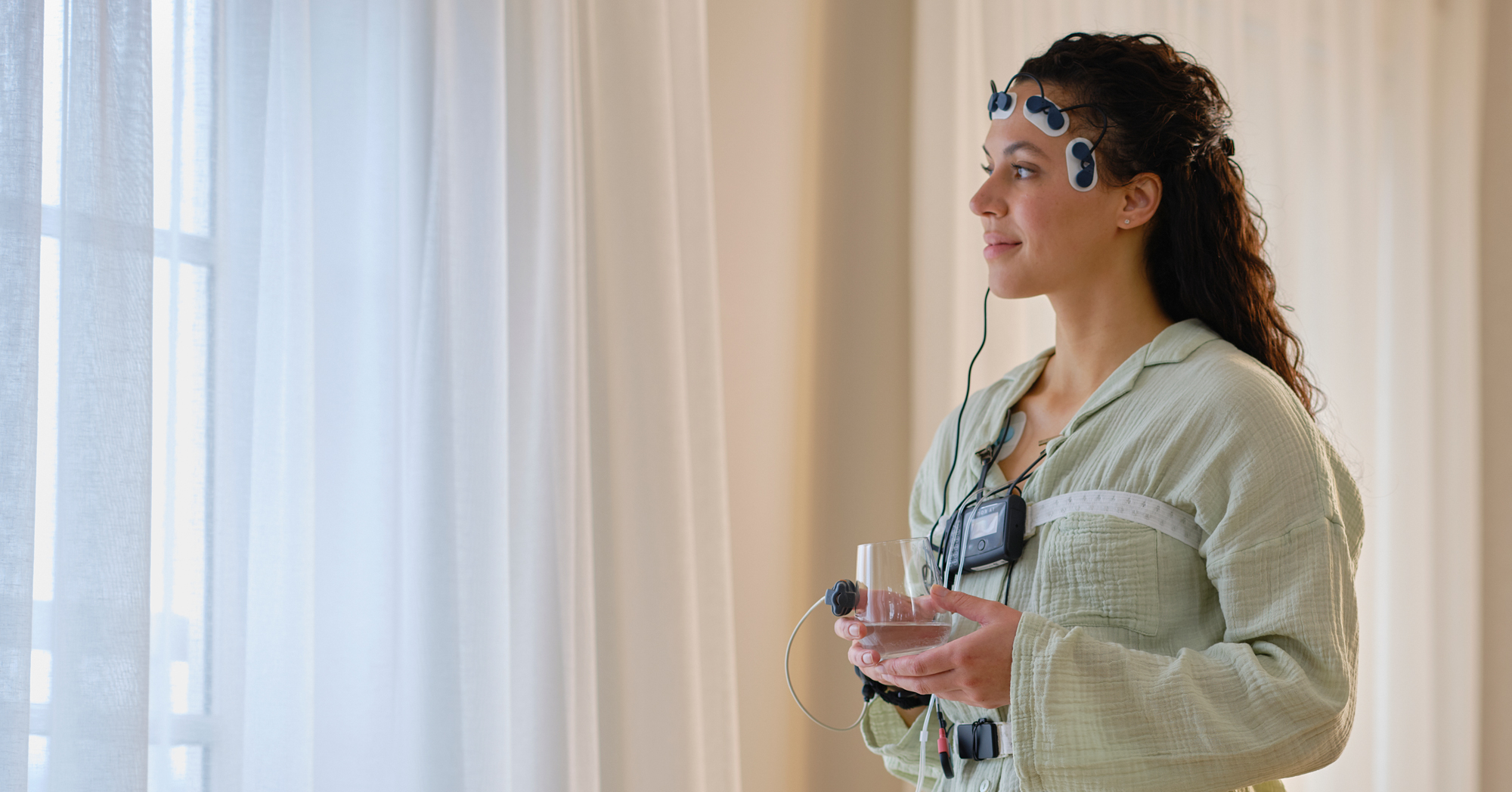
The metrics tracked in PSG
- Brainwaves (EEG) is used to determine sleep stages.
- Eye movement (EOG)
- Muscal activity (EMG)
- Heart rate (ECG)
- Airflow through the nose and mouth.
- Chest and abdominal respiratory effort
- Blood oxygen concentration (SpO2)
What does PSG help diagnose?
- Obstructive Sleep Apnea (OSA)
- Sleep hypoventilation syndrome.
- Sleep movement disorders.
- Insomnia and sleep cycle disorders
According to international clinical guidelines such as those of the American Academy of Sleep Medicine (AASM), PSG is the most accurate method, or the “gold standard,” for diagnosing OSA.
Key indicators in polysomnography results
AHI (Apnea-Hypopnea Index)
AHI stands for apnea or hypopnea, the number of episodes of apnea or hypopnea per hour of sleep, used to classify the severity of OSA.
- Normal: < 5 times/hour
- Mild: 5 – 14 times/hour
- Average: 15 – 29 times/hour
- Severe: ≥ 30 times/hour
SpO2 level
- Reflects blood oxygen levels during sleep.
- Prolonged low SpO2 can increase cardiovascular risk and lead to stroke.
Additional parameters
- Sleep stages: N1, N2, N3, REM
- Arousal index: the number of times a person experiences micro awakenings (short periods of wakefulness).
- Oxygen Desaturation Index (ODI)
These indicators help doctors not only diagnose but also assess the extent to which sleep disorders affect the body.
SleepFi’s polysomnography procedure (6 standard medical steps)
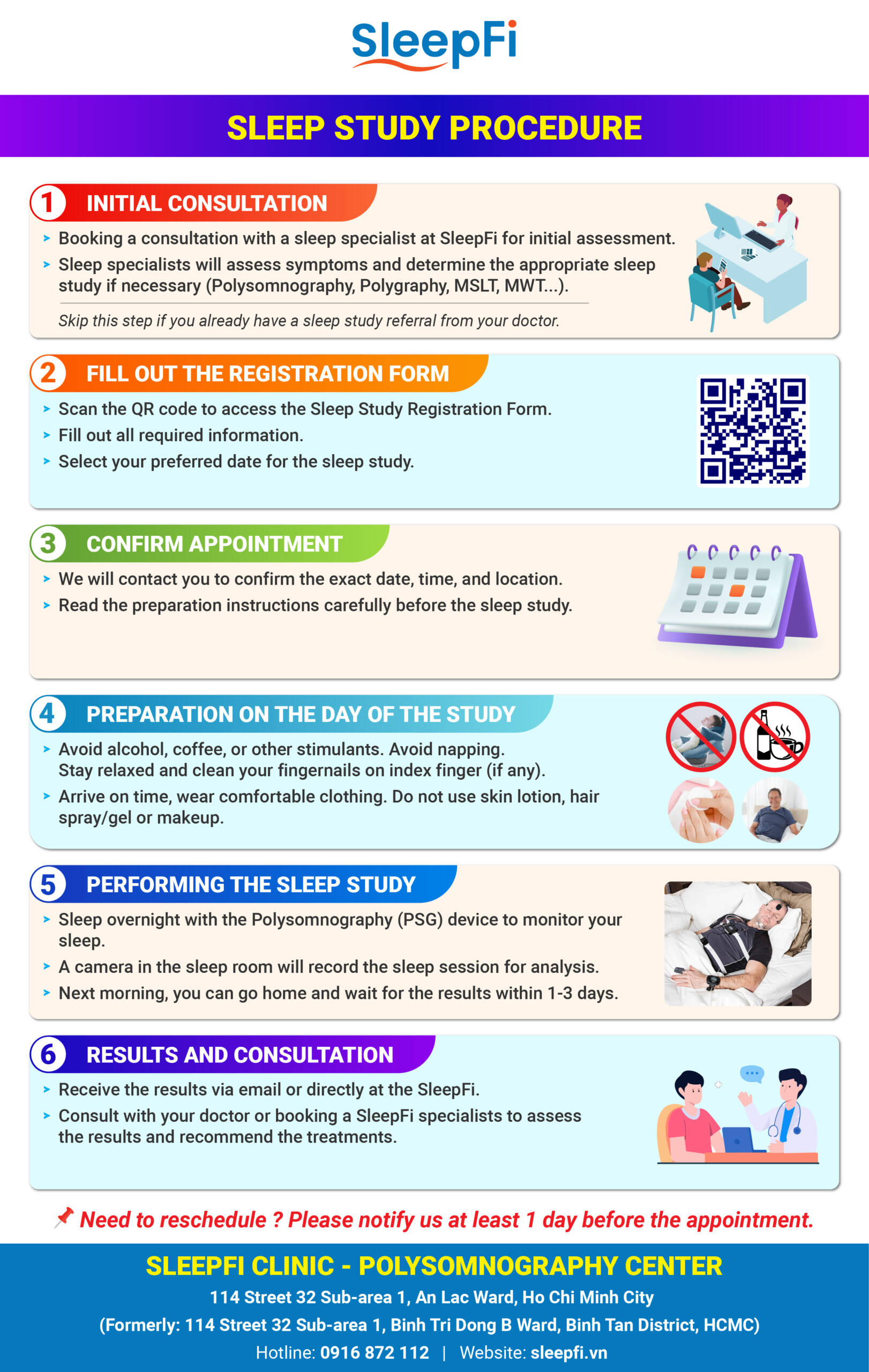
Step 1 – Initial Consultation
Patients are evaluated by sleep specialists based on symptoms such as loud snoring, daytime sleepiness, frequent awakenings, or suspected sleep apnea.
Doctors may use additional screening tools such as:
- STOP-BANG
- Epworth Sleepiness Scale (ESS)
Step 2 – Fill out the registration form.
Patients fill out their health information and choose a suitable measurement time. This information helps personalize the assessment process.
Step 3 – Confirm the appointment.
SleepFi will contact you to confirm the appointment and provide detailed instructions on the necessary preparations before the measurement day to ensure accurate results.
Step 4 – Prepare before the measurement day.
Patients should note:
- Avoid alcohol, beer, coffee, and stimulants.
- Do not take a nap on the day of measurement.
- Do not use cosmetics (including skincare products) or hair styling products.
- No nail polish
- Wear comfortable clothes.
Step 5 – Perform polysomnography.
Patients spend a night sleeping with a polysomnography (PSG) system. Sensors are attached to the skin to record data.
Characteristics of the measurement process:
- Painless, non-invasive
- You can sleep normally.
- There are cameras to assist in analyzing sleep behavior (if measurements are taken at a Sleep Lab).
Step 6 – Receive results and treatment advice.
Results will be available within 1 to 3 days. The doctor will:
- Analysis of AHI and SpO2 levels
- Make a diagnosis.
- Personalized treatment consultation
Viable options include:
- CPAP (Continuous Positive Airway Pressure)
- BiPAP (Bi-level Positive Airway Pressure)
- Lifestyle changes or intensive interventions
Comparison of polysomnography measurements taken at the clinic and at home.
| Criteria | PSG at the clinic | Home Health Monitoring (HSAT) |
| Accuracy | Highest | Medium |
| Number of signals | Full | Limit |
| Fit | Accurate diagnosis | Initial screening |
| In-depth monitoring | Have | Are not |
PSG (Public Health and Clinical Diagnostics) at the clinic remains the optimal choice when accurate and comprehensive diagnosis is needed.
Benefits of polysomnography
Accurate diagnosis
PSG helps to clearly identify OSA and its severity.
Early detection of disease risks
Sleep apnea is associated with:
- High blood pressure
- Cardiovascular disease
- Stroke
- Diabetes
Personalized treatment
PSG’s results serve as the basis for:
- Choose a CPAP/BiPAP device.
- Adjust the pressure to the optimal level.
- Monitoring treatment effectiveness
Improve quality of life.
- Sleep more soundly.
- Reduce daytime sleepiness.
- Increase work efficiency.
Who should get a polysomnography test?
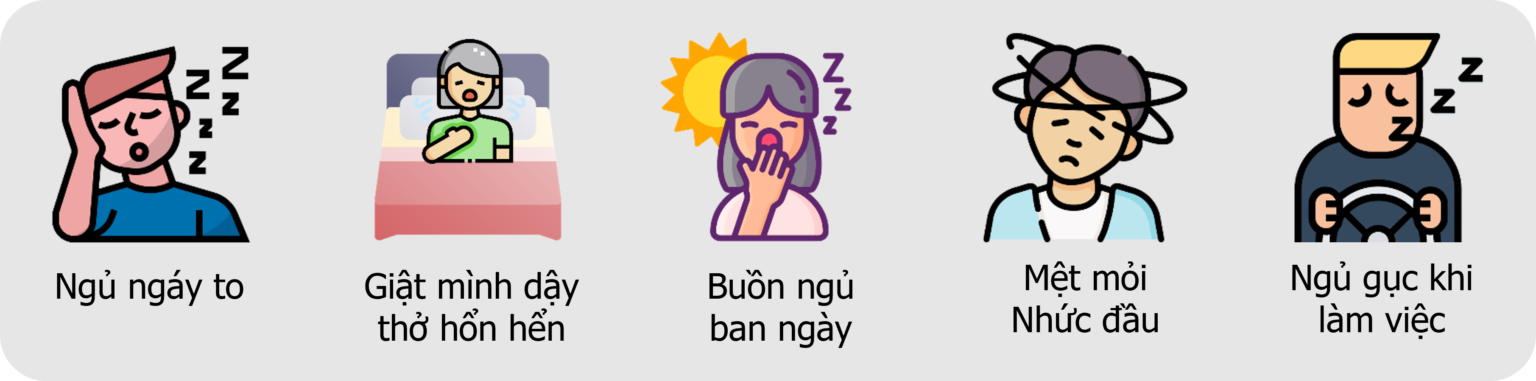
Symptomatic group
- Loud, prolonged snoring
- Sleep apnea
- Daytime sleepiness
- Waking up multiple time
High-risk group
- Obesity
- High blood pressure
- Cardiovascular disease
- Diabetes
The team needs in-depth evaluation.
- Suspected COPD with OSA
- People who have used CPAP but have not seen results.
- People who need a pre-operative assessment
Is polysomnography uncomfortable?
This is a non-invasive test. The sensors are only attached to the skin, so it is painless.
Some people may take some time to adjust to the measurement environment, but most still get enough sleep to collect diagnostically valuable data.
Frequently Asked Questions
What AHI level is dangerous?
An AHI level of 15 or higher is considered to require treatment. An AHI level of 30 or higher is considered severe, with an elevated risk of cardiovascular complications.
When should CPAP be used?
CPAP is usually prescribed when:
- AHI ≥ 15
- Or AHI ≥ 5 with clinical symptoms
Does PSG detect all sleep disorders?
PSG can detect most sleep disorders, especially those related to breathing and sleep structure.
How often should I get measured again?
Depending on the situation, the doctor may order a repeat measurement when:
- Weight change
- Treatment was ineffective.
- New symptoms have appeared.
Why choose SleepFi?
- The equipment meets medical standards and incorporates the latest technology.
- Our team of experienced sleep experts is trained in RPSGT standards.
- Flexible measurement options: at the clinic or at home (Ho Chi Minh City, Hanoi, and Da Nang).
- Long-term partnership in OSA treatment
Schedule a polysomnography session at SleepFi
If you experience symptoms such as loud snoring, fatigue, or suspect sleep apnea, polysomnography is a crucial step in achieving an accurate diagnosis.
Register for polysomnography now!
References
- American Academy of Sleep Medicine
Clinical Practice Guideline for Diagnostic Testing for Adult Obstructive Sleep Apnea
https://aasm.org/clinical-resources/practice-standards/practice-guidelines/ - National Heart, Lung, and Blood Institute
Sleep Apnea – Diagnosis and Tests
https://www.nhlbi.nih.gov/health/sleep-apnea/diagnosis - Mayo Clinic
Polysomnography (Sleep Study)
https://www.mayoclinic.org/tests-procedures/polysomnography/about/pac-20394877 - Cleveland Clinic
Sleep Study (Polysomnography) Overviewhttps://my.clevelandclinic.org/health/diagnostics/12119-sleep-study-polysomnography - National Institutes of Health
What Are Sleep Studies?
https://www.nhlbi.nih.gov/health-topics/sleep-studies


